
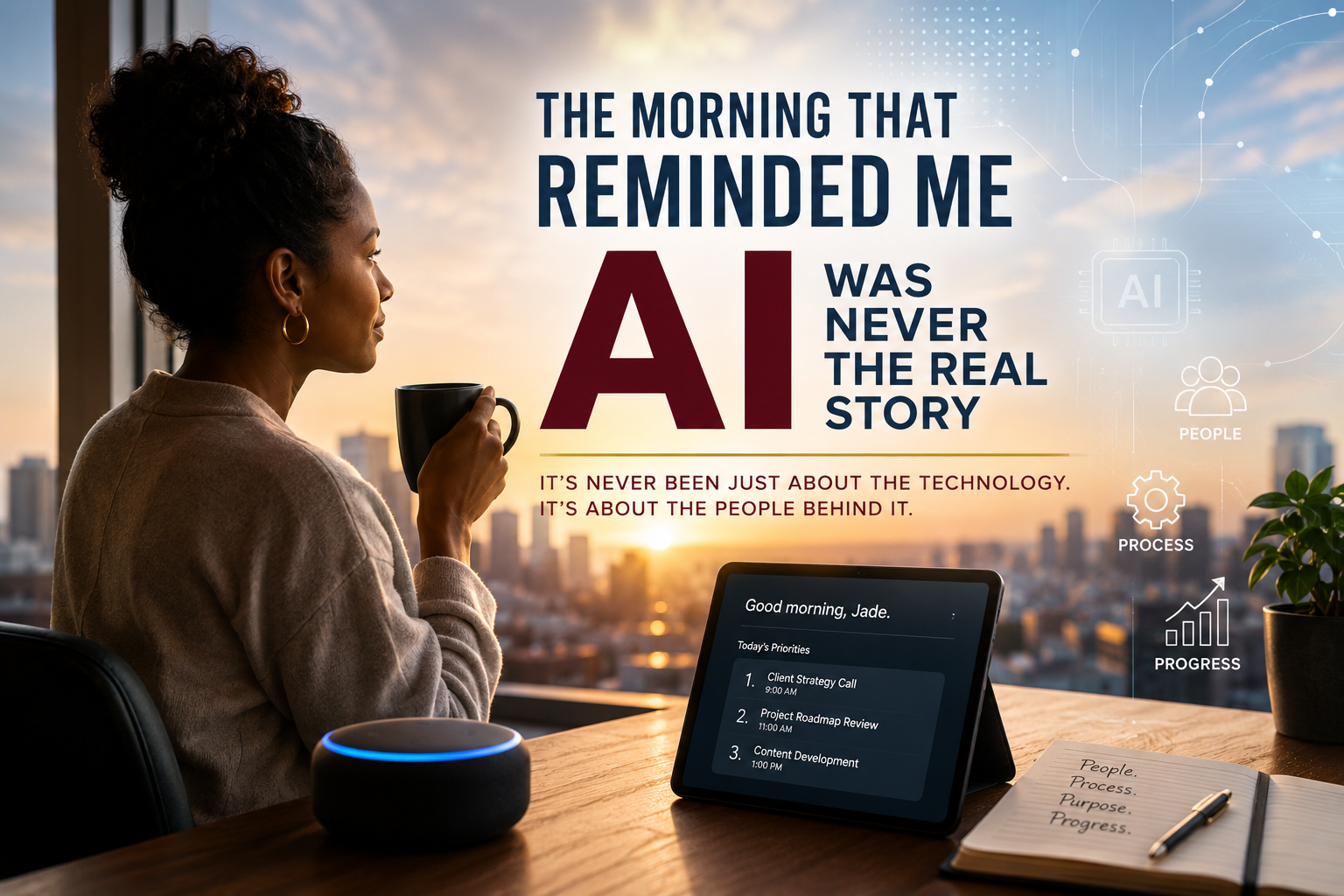
The room was quiet in the way only early mornings can be. Not silent. Just suspended. The world had not fully decided to wake up yet.
Outside, the sun was only beginning to stretch itself across the sky. Inside my home, there was no rush—only routines quietly taking their places.
“Alexa.”
The time. The weather. A quick rundown of the morning headlines.
Nothing extraordinary. Just another small conversation with technology that, not very long ago, would have sounded like science fiction.
Coffee could wait.
My phone could not.
Like millions of professionals beginning another demanding day, I reached for the device sitting beside me. But I was not opening it to search for direction.
Direction was already waiting.
My AI assistant had organized my reminders, separated urgency from distraction and placed the most important priorities directly in front of me. Instead of spending the first part of my morning deciding where to begin, I could simply begin.
Then one notification interrupted the rhythm of the morning.
Congratulations.
I had been selected to speak at a conference.
I stopped scrolling.
Not because another event had been added to my calendar, but because this particular invitation represented something larger. It confirmed that a conversation I had been carrying through years of operations, project management and process improvement was finally reaching more of the people who needed to hear it.
Artificial intelligence was never the entire story.
People were.
Everyone thinks they are buying AI. They are actually buying change.
Change has never arrived with a simple installation guide.
Throughout my career, I have worked with organizations and professionals across legal services, banking, insurance, operations, sales, entertainment and technology.
The industries were different. The systems were different. The budgets, pressures and business goals were different.
Yet the same story kept repeating itself.
A company invests in a new platform. Leadership is excited. The demonstration is polished. The capabilities are impressive. Employees attend training, consultants complete the rollout and everyone is told that the future has officially arrived.
Then Monday happens.
The spreadsheets return.
The handwritten notes return.
Employees begin building quiet workarounds. Managers continue approving work through the old process. Departments create their own unofficial systems because those systems feel more familiar than the one the organization just purchased.
Months later, leadership begins asking why the expected return has not appeared.
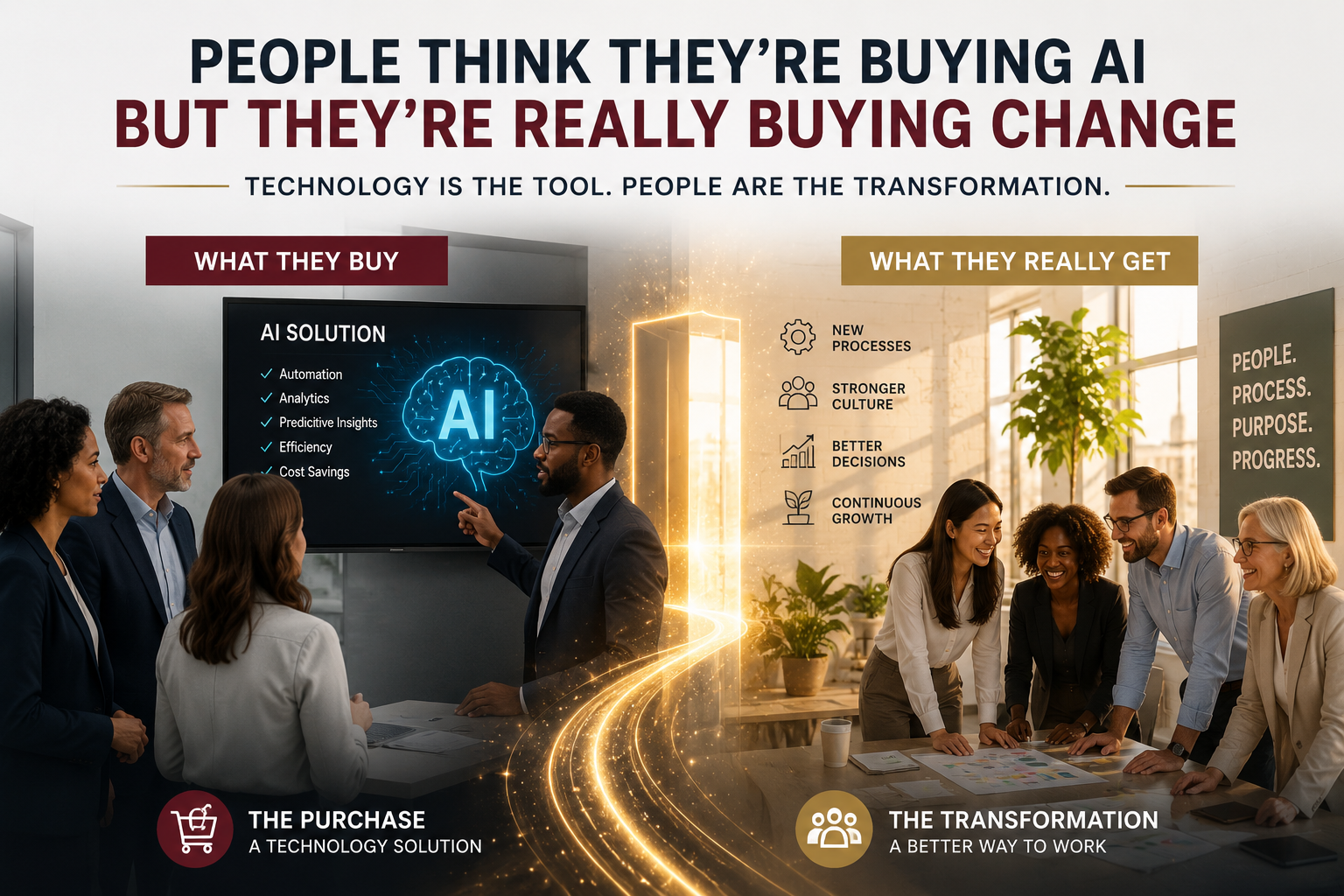
The AI did not fail. The implementation did.The human side of adoption
The technology may have operated exactly as promised. The organization simply never created the conditions necessary for people to use it successfully.
The question that changed the way I approached transformation
Eventually, I stopped asking only how organizations could implement better technology.
I started asking a more important question:
Why do intelligent, capable people resist tools designed to help them?
That question led me deeper into operations, leadership, project management, process improvement and organizational change.
It also changed the way I thought about artificial intelligence.
AI is not introducing an entirely new organizational problem. In many cases, it is exposing an old one.
Technology moves quickly. People need context, trust, training, psychological safety and time to understand what the change means for their responsibilities.
When those human needs are ignored, resistance should not surprise us.
AI is not replacing my thinking. It is removing the friction around it.
That morning reminded me of what responsible, practical AI use can actually look like.
My assistant was not making decisions for me. It was not replacing my judgment, my experience or my creativity.
It was helping me reach those things faster.
Instead of staring at a blank page, I could explore ideas.
Instead of spending an hour organizing information, I could spend that hour refining strategy.
Instead of allowing repetitive work to consume the best part of my energy, I could direct that energy toward the work that still requires human imagination, leadership and discernment.
That is not replacement.
That is amplification.
Why I teach AI adoption
There is no shortage of courses teaching professionals how to write a prompt or test a new platform. New tools appear constantly, and many of them are useful.
But there are still too few conversations about the people expected to use those tools.
That is the gap I wanted to address.
My approach to AI adoption is not built around becoming impressed by the technology. It is built around helping professionals, students, small businesses and organizations understand how to integrate AI into the work they are already responsible for performing.
Implementation is not about replacing people.
It is about helping people perform at a higher level while preserving judgment, accountability and human creativity.
When organizations understand that distinction, the conversation changes.
ATD Houston 2026 Talent Development Conference and Expo
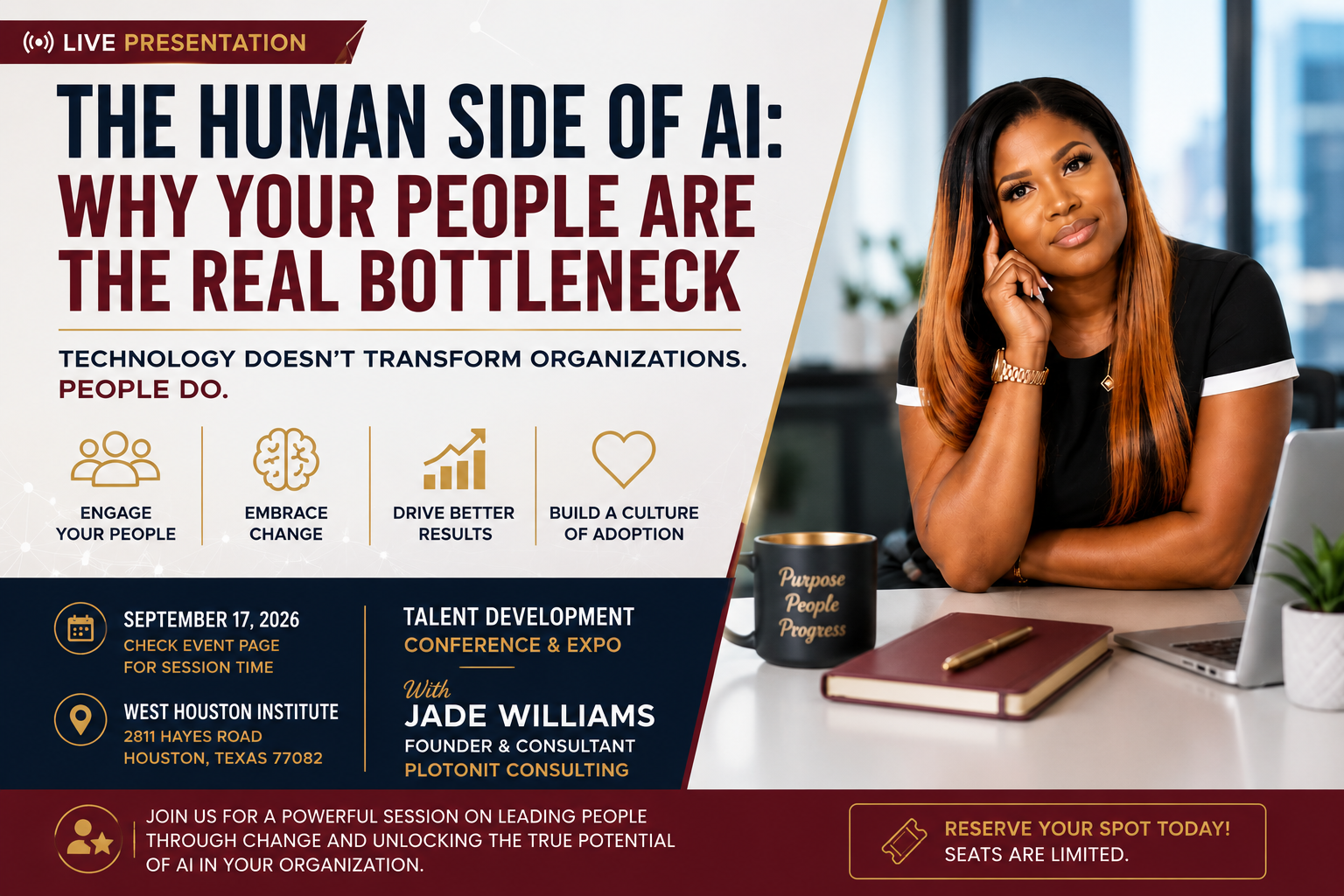
Jade Williams will present “The Human Side of AI: Why Your People Are the Real Bottleneck” as part of the conference’s BUILD track.
This conference is not the end of the story
When the confirmation arrived, I felt honored. But more than anything, I felt energized by the conversations that could follow.
AI adoption is not only a technical topic.
It is a confidence issue.
A leadership issue.
A learning issue.
A process issue.
It is about building systems people understand, trust and can realistically use.
When organizations solve that problem, AI becomes more than an expensive software purchase or another platform employees are expected to tolerate.
It becomes a real competitive advantage.
I am looking forward to sharing this message with leaders, entrepreneurs, students and professionals who are ready to move beyond the hype and begin implementing AI in ways that create sustainable results.
The conference is one chapter.
The larger conversation is just beginning.
Follow conference updates, review the session overview and explore supporting resources on the dedicated conference page.
Visit the ATD Houston 2026 conference experience →